A 6-part Series to Ensure the Fire for Hunting Never Burns Out.

The key to this formula is to communicate the “program” to your kids so they understand where they are in the hierarchy of hunting within your family. Having these levels of “graduation” creates something to work towards and builds anticipation for the next level. The last thing you want is for your 6-year-old to be at the climax of their hunting career when they shoot a 140” buck on their first hunt of any species. It can cause a lack of desire for the smaller things hunting can offer.
If you want your kid(s) to love hunting and for the outdoors to truly be a part of who they are, consider this formula for getting your kids into hunting as it builds a fire in their belly and builds a strong foundation over time. A foundation rooted in respect for the outdoors and the animals we pursue. I couldn’t be happier with my kids’ love for hunting. After putting in the time, my (soon to be) 15 year old and 13 year old boys are as safe and competent as any hunters I know. There are many ways to get your kids outdoors, they may be different than mine, and that’s ok. As long as you are raising them the right way, and they enjoy being out there, you are doing it right!
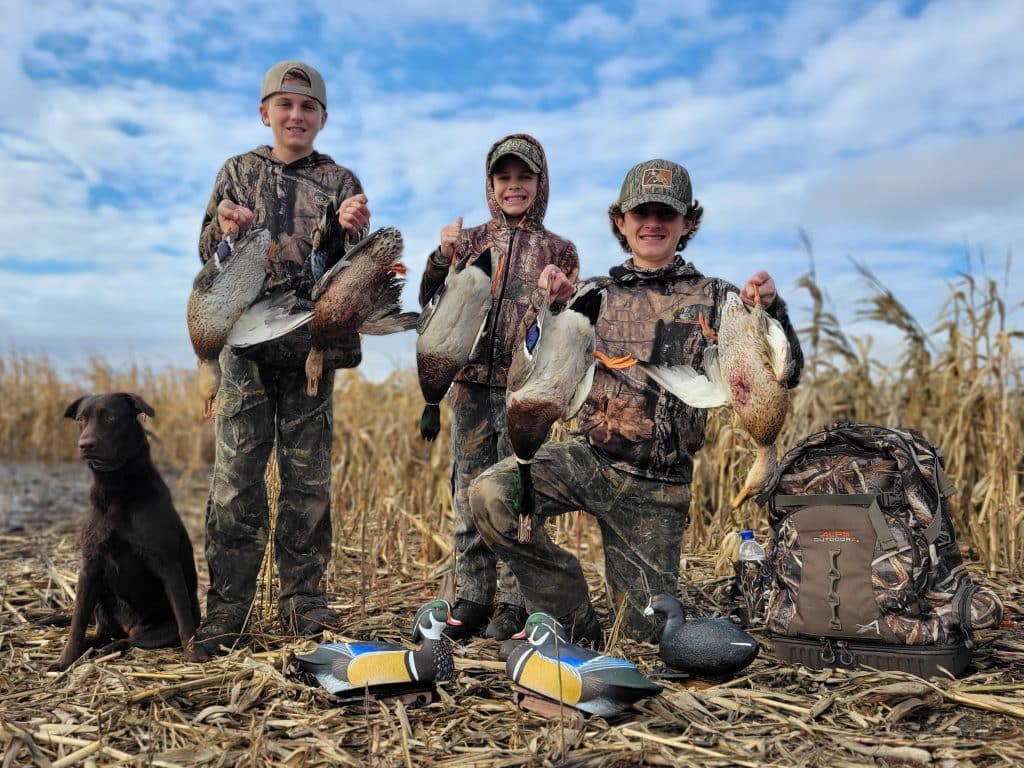
In short, I’ve broken it down into age classes that serve as “graduations”. These are the age classes I chose and by no means are they set in stone, merely a guide that worked very well for us. If your kid(s) are past these ages, don’t fret, just be mindful of starting them out too fast and or expecting too much from them. Build that fire, it will be worth the time and effort in the long run! In this 6-part series I will break down the details of each “level”.
Here’s a brief overview.
- As a baby/toddler, introduce them to outdoors/hunting by imprinting on them that hunting is a part of who you/they are. Take plenty of pictures with your harvests to reference back on, have them wear camo, play with duck and deer calls, play “hunting”, etc.
- Starting at 4 years old they can come out on the dove bucket and follow you around in the squirrel woods.
- At 6 years old they can come out and sit in the deer woods with you.
- At 8 years old (if proven capable) they can start hunting with a shotgun (I’ll explain later in part 4 why a shotgun and not a .22 rifle) for squirrels, then progressing to doves, ducks, and pheasants, and any other small game.
- At age 10 (if proven safe and competent) they can start hunting turkey and deer.
The key to this formula is to communicate the “program” to your kids so they understand where they are in the hierarchy of hunting within your family. Having these levels of “graduation” creates something to work towards and builds anticipation for the next level. The last thing you want is for your 6-year-old to be at the climax of their hunting career when they shoot a 140” buck on their first hunt of any species. It can cause a lack of desire for the smaller things hunting can offer.
This formula builds a love for hunting and the outdoors, not a love for always having to kill something when they go out, only to be let down more times than not. Keep in mind, a successful hunt to them could be just seeing the species you are after, if you foster that mindset.
Over the years, I’ve received many compliments on my kids’ attitude and competency for hunting. The pride I have for my kids’ love for hunting and the outdoors is unmatched. This didn’t happen overnight. It was a lot of time and sacrifice of my own hunting time, but it was well worth it because I now have hunting partners that I can take with me on any hunt. My daughter is now 10 years old and just completed her first season of actual hunting. She was a year “behind” because she was much smaller than the boys at 8 years old. She could tell you how much she has waited for her time to get out with her brothers and I. All of the tagging along prepared her for when her time came!

I became a father in the Spring of 2009, at the time, I was 26 and a fairly avid hunter pursuing small game, waterfowl, and deer. Hunting was a big part of my fall and winter activities and it was MY time. When Adam was born, I knew that I had just been gifted a future hunting buddy, the questions were, when and how do I introduce him into it the right way so that he loves it and doesn’t get a bad taste for it.
It wasn’t long after and Adam now had a little brother, Wade. They are 18 months apart, and some of my favorite memories of them being young toddlers was coming home with “burds”, or if I had a great hunt, a big ol’ doe in the back of the truck bed. I’d have them sit on the tailgate, touching the birds/deer, asking questions, while sharing my excitement and enthusiasm of how the hunt went. Therein lies, the first step in creating your next hunting buddy. Imprinting!
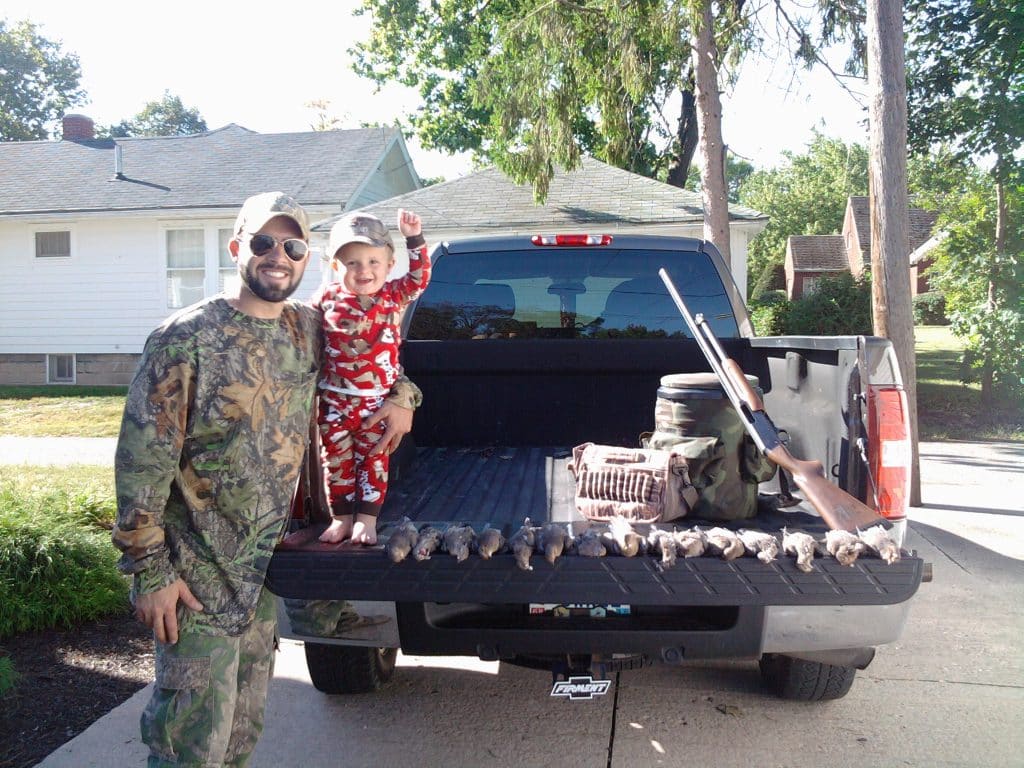


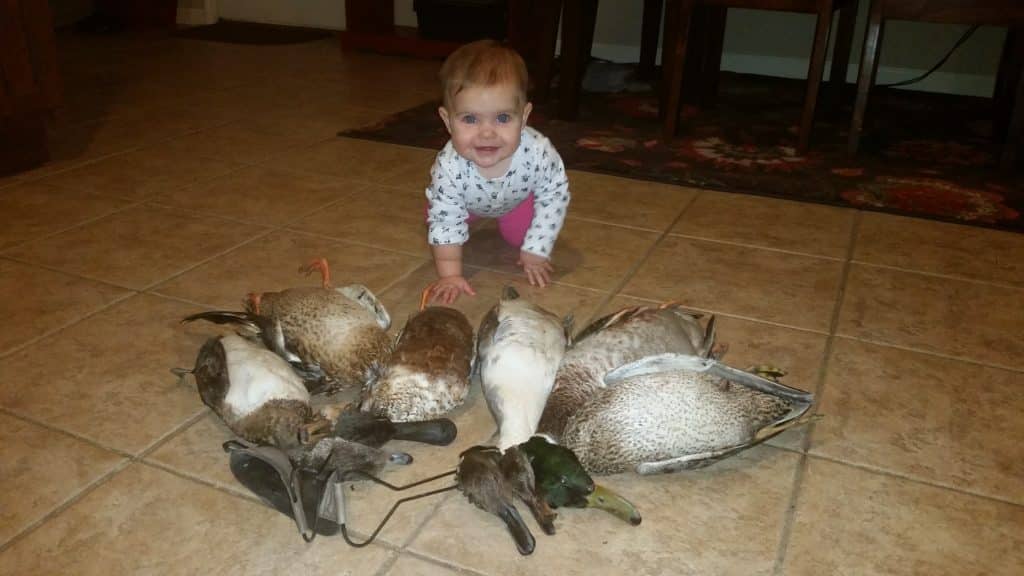
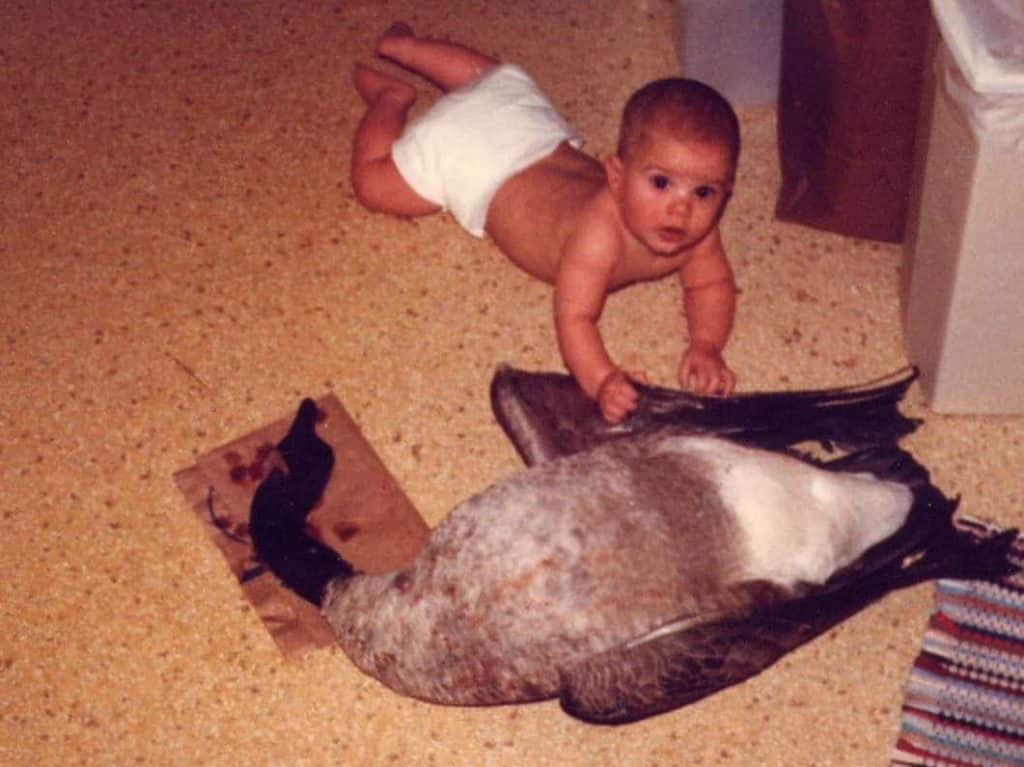
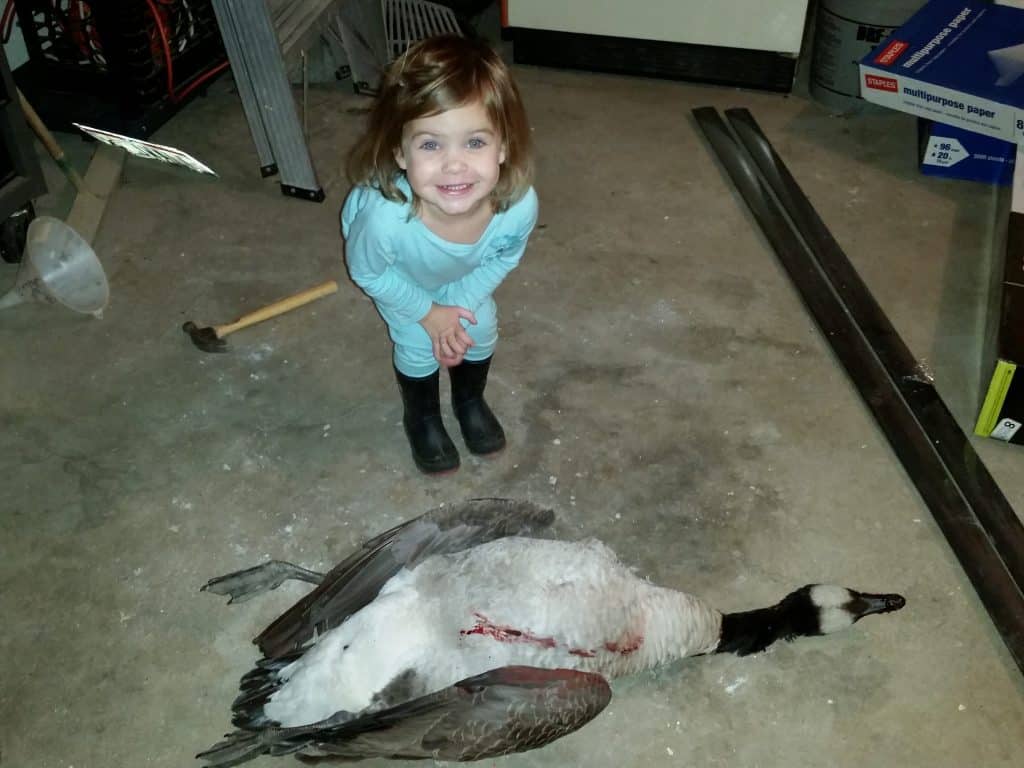
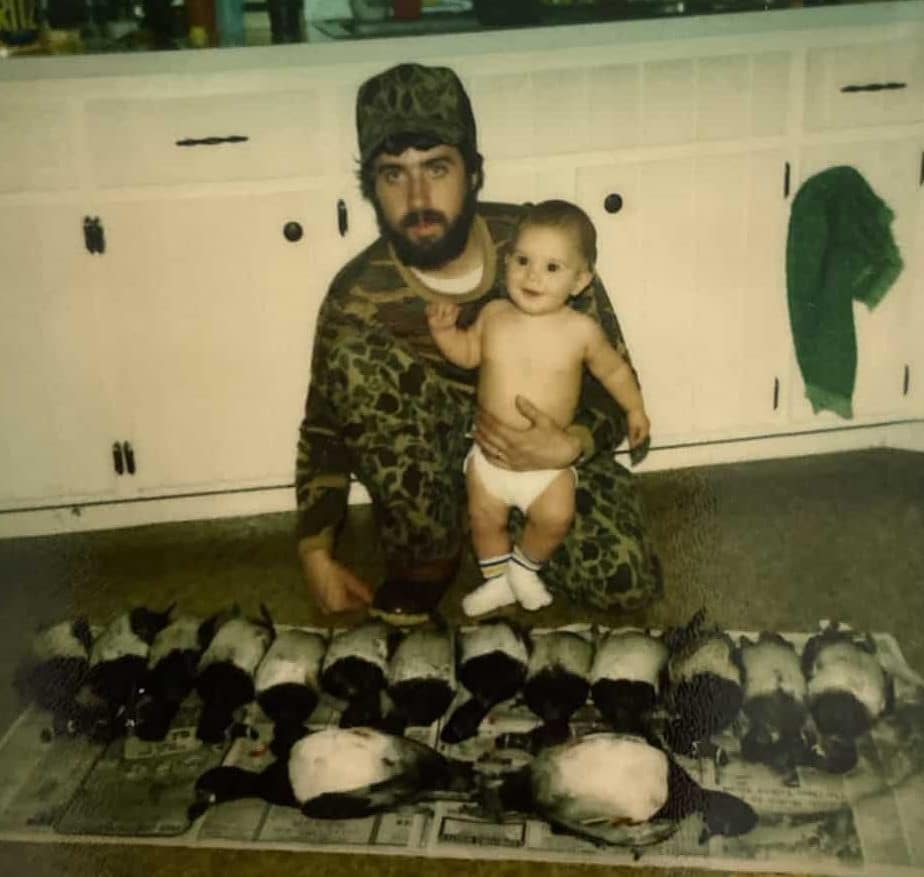
Step 1 Make sure to take plenty of pictures of your infant/toddler age kids with your harvests and if you’re a terrible hunter, just pictures of you and them with your gear on works too 😉. I fondly remember looking through the family photo albums as a kid, and there were several pictures of me with dead waterfowl, fish, etc. There I was, still in diapers, and being introduced to hunting. While I couldn’t remember those moments, as I was too young, periodically looking through those albums reminded me that I too wanted to become a hunter, because it was who we were as a family. I have since recreated one of my favorite photos. Below are pictures of me and my three kids with our “1st Goose”.


Let them watch you clean your firearms. I still remember watching my uncles clean their guns at my grandparents’ house. The smell of Hoppe’s 9 is still just as vivid in my mind as it was 30 years ago. Teach them about basic firearm safety. Instill the “respect-fear ratio” of firearms at a young age. Let them help you pick out your gear to take on your next hunt. Anything to let them soak up knowledge and love for hunting and the outdoors.
My Dad, also John, was an avid hunter and was the reason we had dead animals to take pictures with when I was an infant/toddler. My parents divorced when I was around 4 and my stepdad, Mike, came into my life when I was about 6 years old. While not a hunter himself at that point in his life, he did come from a family that hunted. That said, we didn’t go hunting when I was young, because he and my mom both worked to support our family. We did however go camping and fishing on the weekends a lot growing up!



I only bring this up as I did not have a “template” to follow when I became a father, so I kind of wung it. Initially it was based off a little bit of selfishness because I enjoyed my time in the woods. I had also been seeing and hearing some other parents not having as much success keeping their kids interested in hunting, they’d rather be on their tablets, phones, or video games. Some of the kids were just too young to be hunting themselves, in other cases the parents were selfish and lacked the patience needed to make it a fun time for the kid(s).
I’ll take a second to point out something important that I think really helped me create their love for the outdoors. My kids didn’t really have gaming systems at the house, and the oldest 2 didn’t get phones until Christmas of 2022 (8th grade and 7th grade respectively). They had already been hunting for 5 and 4 years and didn’t have tablets or phones they were reliant on. My wife and I made conscientious decisions to keep them away from electronics for as long as we could. This really helped with their patience and ability to be ok with being bored.
My wife and I made conscientious decisions to keep them away from electronics for as long as we could. This really helped with their patience and ability to be ok with being bored.
While every kid is different, both mentally and physically, I feel that most kids under the age of 8, just don’t have the understanding of what it means to take a life, nor do they have the ability to handle a firearm safely and or independently. Again, I know some 6 year olds that can handle a .22 rifle or even a .410, but it shouldn’t be expected by every parent. Chances are, those kids who can safely handle a firearm, live and breathe the outdoors and don’t have phones or gaming systems. Most kids under 8 years old are heavily reliant on their parents to do most of the things for them, and the kid is simply brought out in the woods to just pull the trigger. What expectations are we setting for them about what hunting is?
The child should know what is expected to make a clean humane kill. They should understand hunting helps pay for wildlife conservation, they should know that hunting is not “killing”, but providing an opportunity to put meat in the freezer. Proper range time and effectiveness with a firearm should be proven before they are granted the privilege to pull the trigger. An injured animal due to lack of firearm experience is not fair to the animal, and an unretrieved animal is not a great experience for the child. Don’t just wake them up out of bed one day and place them in a deer blind. Its best to have them learn as many skills as possible before they carry a firearm. They should know the reasons why we as hunters do what we do. In the states I have lived in (OH & MO), both offered apprentice licenses for anyone who hadn’t yet passed their hunter safety. We took that opportunity to get the kids in the woods. I recommend having the kids take their hunter education course when they are at least 10 years old* or when they have the ability to read and comprehend the questions on the test. *Some states have an age restriction on when kids can take hunter education. For example, Kansas is 11 years old.
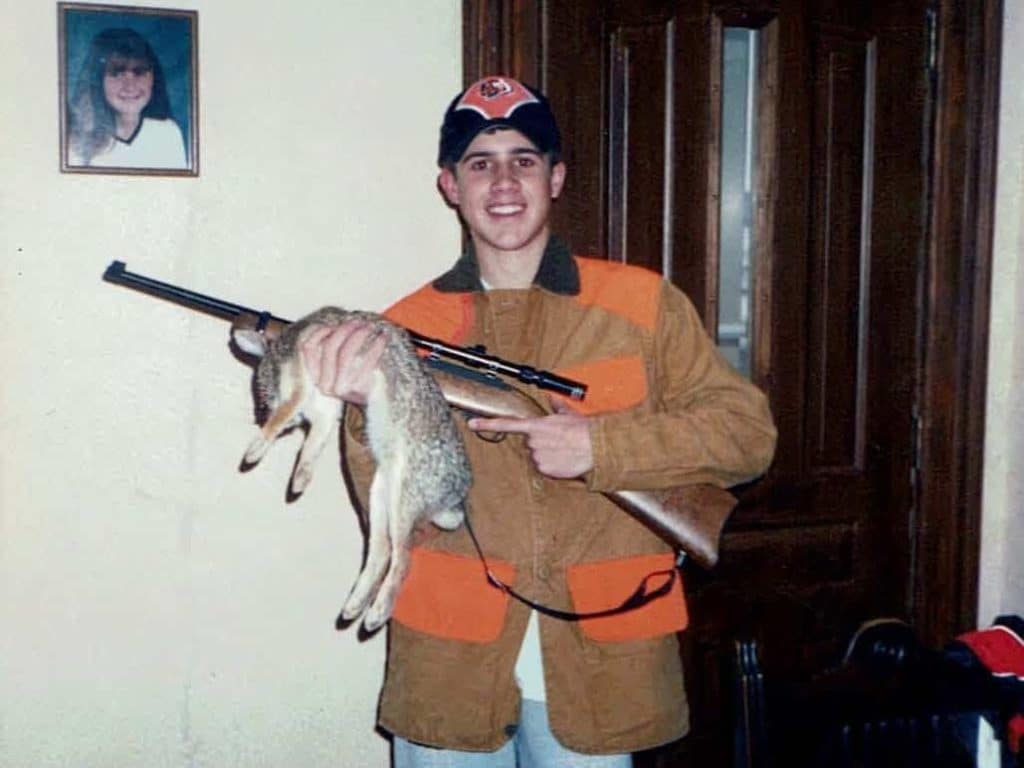
For my introduction to hunting, it’s worth noting that there wasn’t as many distractions as there are today for young kids. There weren’t a lot of electronics to keep us indoors, while I did play sports, they weren’t as demanding of your time as they are today. I started hunting when I was around 12 years old. My uncle Kevin took me out squirrel hunting a couple of times and while I don’t remember getting any squirrels that year, it was fun just being out in the woods with family; it was something I had looked forward to for a very long time. When I was 14, I finally got a chance to go deer hunting with my other uncle, Mark. My Uncles taught me how to walk quietly, look for animal sign, to leave it better than you found it, etc. All of these things stuck with me and I’ve since passed them onto my kids, and these are the components of future steps, which you will learn about in future installments of Raising a Lifelong Hunting Buddy.

In Step 2 we finally hit the field and get in the woods! There is so much to learn for the young ones. Bring snacks, dress for the weather, and don’t plan on staying out too long. See you back here soon!
Leave a Reply