
By adding the pressure of trying to fill the freezer, coupled with your child’s challenges, your own patience might be tested and it’s not good to be on edge or lose your composure. Remember, they are 4 years old and this isn’t about this season, it’s about a lifetime of hunting seasons if you do it right.
In part 1 of Raising A Lifelong Hunting Buddy we shared with you some great ways to “imprint” hunting as a way of life into your child. Engraining those memories of hunting into their being is something that would be hard to wash away over time. In part 2 we look to “Condition” them for the hunt. Build them up to work through boredom and work through adversity such as walking a lot or walking through tall cover.
Step 2 Age 4, its finally time to tag along! By this time, your kid is now able to communicate effectively and they are starting to be more independent. Dove or squirrel hunting is a great way to introduce them to hunting. NOTE: This hunt is not about you, it’s about them. Keep the hunt short. Maybe only plan to “hunt” for an hour or so in the afternoon. Most 4 year olds are going to be bored or tired from walking for 2 hours. You want to end the hunt before they get tired. You want them to leave wanting more! Make sure they have FUN.

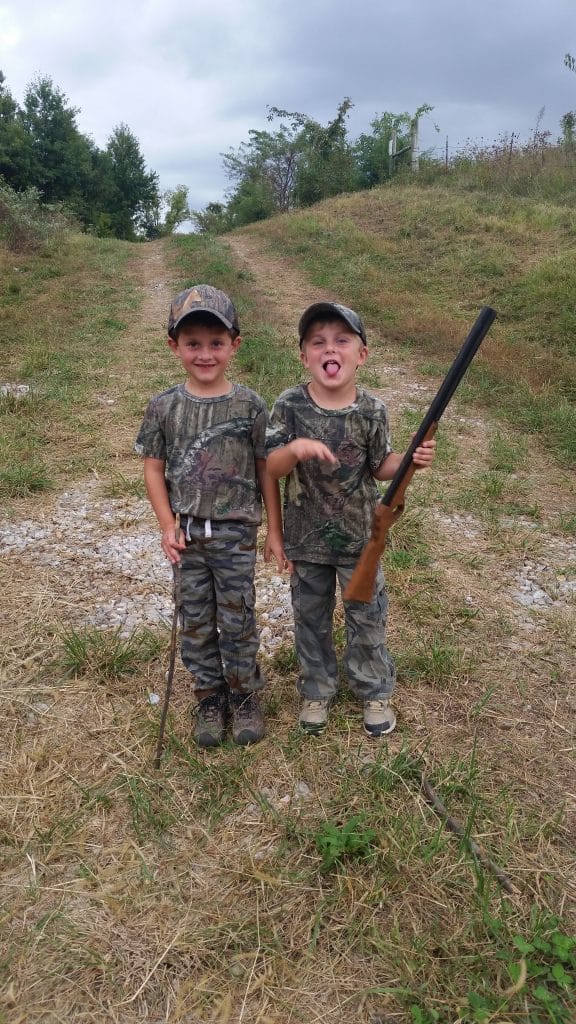

Bring ear protection, and eye protection if needed. Making sure they are comfortably dressed, not too warm or too cold. Early season hunts are best for getting out there for the first couple of times. On colder days, my wife used to always dress them up like Ralphie from The Christmas Story and they could barely walk! 😂
Hot Hands hand warmers are a must when it’s even remotely cold. Make sure they have waterproof boots, these could be plain ol’ rain boots, doesn’t matter the color. As it gets colder you will want insulated boots. While youth camo isn’t exactly needed and it can get expensive quick, cold feet can get your kids out of the woods in no time, so make sure you invest in boots. Once upon a child or other second hand stores can be a great resource for camo and or hunting boots. Bring a butt pad to sit on or a small stool if needed. Bring water and plenty of snacks! Its best to put everything in a backpack. If it’s not too heavy, maybe they could carry it on their back. If they are having fun, aren’t tired, and there are still snacks, its likely they will want to stay out longer.
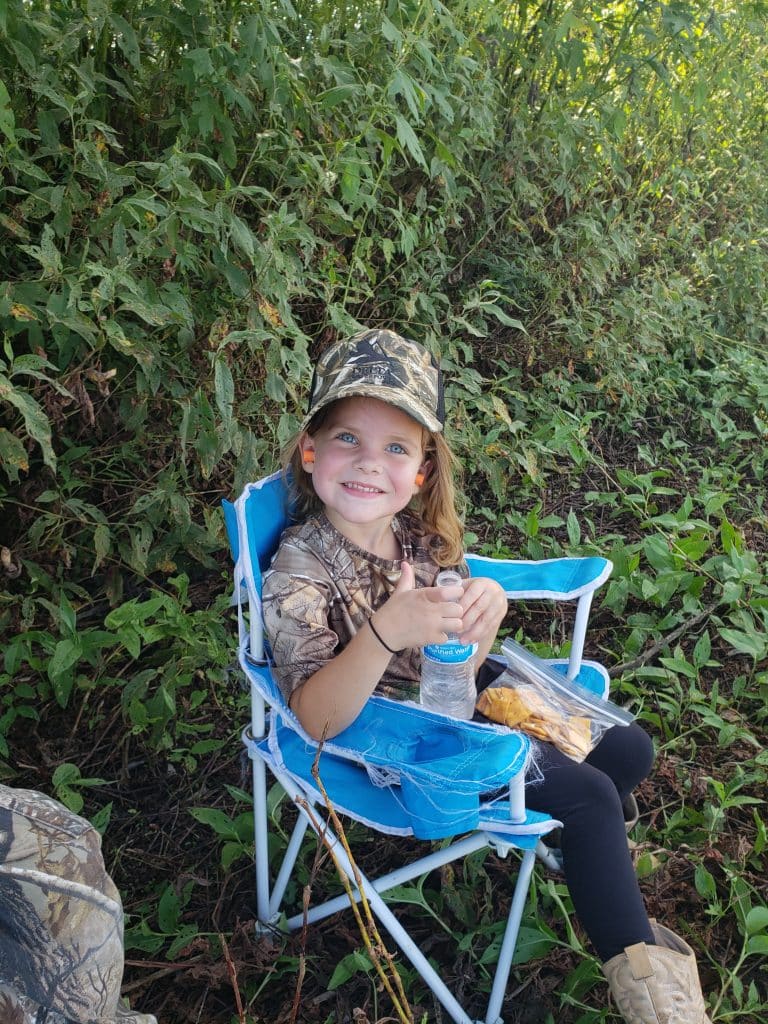
The key is to condition them with each hunt to be a little longer each time. Do your best to make that first hunt last at least an hour, so you don’t set expectations that hunts are short. Then with each passing hunt, build on it slowly over the years. You will know your kid, and how much you can push their patience. Just don’t push it too far to where they go home with a bad taste in their mouth from the hunt. I’ve been there. Everyone has their bad days. Just remember to keep your expectations low and that should guide you in the right direction.
It may sound funny now but remember to take your shotgun! The very first time I took Adam with me, I packed everything, I had everything he would need, including the steel shot we needed due to dove hunting on a waterfowl unit. We get all the way to the spot, we check in at the shop to get our daily hunting card, and from the back seat, I hear “How are we going to kill any doves without a shotgun Dad?” My heart sunk into my stomach. True story. 😅 We ended up heading out to the spot anyway, we sat on a bucket and waited for doves to start flying. No doves flying that evening was even more salt in the wound, but a great story and lesson learned none the less.


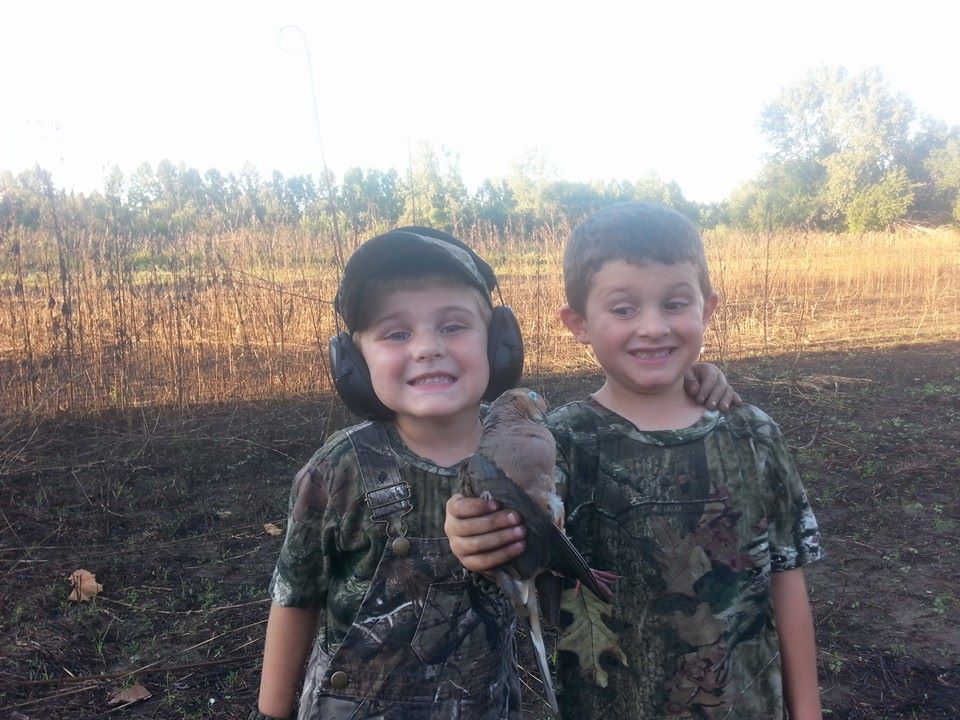
Most 4 year olds have very short attention spans. Its best to keep the hunt lively. If you start out with doves, don’t forget to bring ear muffs. Have them set out some decoys, if it’s a slow hunt, have them move the decoys. If you don’t use dove decoys, buy some cheap plastic ones, it’s something for them to do and it makes them feel like they are a part of the hunt rather than just an accessory. If you go squirrel hunting, make sure to have a squirrel call, I have mine from when I was 12 years old and it adds some excitement on a slow hunt. If you don’t have a squirrel call, take 2 quarters with you and tap one into the other. It sounds like a squirrel eating on a nut. My uncle Kevin did that on our first squirrel hunt together and I still remember it. Sometimes I’ll even grab two acorns or hickory nuts and tap and rub them together fast to make it sound like a squirrel eating. Anything you can do to create core memories of hunting.
Take plenty of pictures! Capture lots of smiles. Teach them the small things. Show them animal sign. Pick up any litter you might find. Talk to them about being quiet in the woods. Be sure to go home with a special rock, walking stick, or maybe an animal bone you found, just don’t go home empty handed. Go home and have them share the story of the hunt with mom or dad or have them call the grandparents to tell them about it. Just make sure they can share the excitement with someone while it’s still fresh in their mind.

Your main goal anytime you take them out should not be to kill something while they are out with you. If it should happen, great! By adding the pressure of trying to fill the freezer, coupled with your child’s challenges, your own patience might be tested and it’s not good to be on edge or lose your composure. Remember, they are 4 years old and this isn’t about this season, it’s about a lifetime of hunting seasons if you do it right. Be care free, teach them that hunting is fun. It’s an important part of our family, but more so it’s about being happy outdoors with family and friends.
While your own personal goal is not to kill something, it is important that at some point early in the hunts you go on that there is a kill to keep them engaged and to also connect the dots. That this is why we are out here! It’s like bluegill fishing, there is typically a lot of action which makes it great for kids to stay hooked (pun intended). You wouldn’t take a kid new to fishing, musky fishing for their first time. They would be bored and tired within the first 15 mins.
On my first couple of squirrel hunts with Adam, I took my Ruger 10/22. It’s what I grew up hunting squirrels with and that’s just how I hunted squirrels. Shotguns would be too easy. I quickly realized how hard it was to spot and stalk squirrels with a 900 lb. silverback walking through the woods behind you. It wasn’t until Thanksgiving morning that first year that I FINALLY connected on a squirrel with my rifle. Adam and I were actually working our way back to the truck when I spotted this big ol’ fox squirrel on the other side of the ridge. I couldn’t have been more relieved…the pressure was finally off! All Adam wanted to do was get home to show off our harvest with mom. Note: We wore orange because it was antlerless firearm season and it was required to be worn. We ended up frying the squirrel for thanksgiving dinner and it was a part of our “what are we thankful for” discussion at the dinner table. That was the beginning of the Annual Wallace Thanksgiving Day Hunt. This past year made the 10th annual! Making that hunt extra special as my daughter joined us with a firearm for the first time!

The following fall now with Wade being 4 as well and now having TWO 900 lb. gorillas following me, it was clear a shotgun was a must. Don’t get too hung up on them being super quiet, but make sure they know they are supposed to be walking quietly. They don’t have the body control at that age to walk the way adults walk quietly. I relate my experience with the kids walking quietly to that of a kid holding a flashlight for Dad in the garage, no matter how hard they try, it’s just never good enough. 😜 Just be patient while also being persistent.

Managing just 1 kid is exponentially easier than managing 2 in the woods. This was an important lesson learned for me that year and one of the many times I had to put my own standards and expectations to the side for the sake of the kids. Having a shotgun allowed for those quick see and shoot moments which provided more opportunities for successful harvests. Not to jump ahead, but that is why I mentioned at the beginning the use of a shotgun when they start out because it can be tough for an 8 year old to get on a squirrel with a .22 quick enough. Plus, typically earlier in the year, when it isn’t as cold, there are more leaves on the trees and makes a .22 rifle that much harder than a shotgun as well. When the time comes to graduate to a .22 for squirrels, that is where the real hunting begins! So much can be learned with a .22 rifle for small game. Stay tuned for that later in part 4.
Build on their patience. With each hunt you should be looking to condition their ability to sit still in 1 spot for a period of time. If you are constantly on the move at their discretion, you will create a hunter with little patience. Work towards a goal. Maybe it’s only sitting for 10 minutes in 1 spot, but that 10 minutes is longer than the 8 mins you did the last sit or the previous hunt. A great way to get “buy in” is to have them choose where you go next, do we go down the left trail or the right trail. Having them make some “important” decisions can make the hunt more memorable.

After successful hunts, make sure to include them and any of the other kiddos at home in the process of cleaning and processing your animals. This not only continues to include them in different aspects of the hunt, but it also helps in connecting the dots of where their food comes from. In our house probably 75% of our protein is wild game, the other 25% being chicken and pork (mostly chicken).
Side note. Something I’ve always done and it still applies to this day, is I like to use fast food as positive reinforcement at the end of the slow hunt. It’s a great way to end on a positive outcome. Especially if patience wore thin on one or both of us. For me, it’s McDonald’s. But it could be whatever is special for you guys. It’s also a way to sit down, rest your feet, and celebrate someone’s success on the hunt. We don’t do it every hunt, but you’ll know when it’s the right time. We don’t eat out very often, so they know it’s a special treat.


Other ways to involve your kids in hunting when they are under the age of 6 is to take them on scouting trips in the truck. If you are looking for turkeys in the fields in the spring or deer in the fall, taking them along a quick road trip is a great way to build anticipation for the hunt. Make sure to have a set of binos and of course make sure to have some snacks!
Shed hunting is great to show them animals sign and talk about animal movement and possible setups for the fall. Just remember they are little and a lot of walking can burn them out quickly, I have done it to them. It might be beneficial to “plant” a shed or 2 in the field or in the woods for them to stumble onto. It’s not necessary, but if you don’t have great spots for sheds, setting them up for success may be helpful in getting them more bought in. Also, it doesn’t have to be a shed to be a successful “hunt”, animal bones, rocks, cool sticks, whatever they think is cool when they find it. It’s also great if you can pair a shed hunt with a morel mushroom excursion! Just make sure there are mushrooms if you can, it’s a lot of work and walking if there is no success. Bring plenty of water and fill your backpack with some snacks.

If you have a hunting dog at the house, young kids can definitely help throw bumpers and help with other aspects of the training. My kids loved training our first hunting dog, Zeke and now they are much older and have helped a lot training our 1 year old lab, Ronda.

Frog gigging or “hunting” is also a great way to get kids outdoors and fired up. Its best to scout ahead of time and have plenty of frogs to get after. Make sure to bring plenty of bug spray! This is maybe the one time where snacks aren’t necessary, because there is going to be so much excitement of being up late at night and its likely taking place after dinner. If you wanted to bring some nets, they could try to catch some of the frogs themselves. When we lived in Missouri, frog season always came in at sunset on June 30th. It was always warm and it was our unofficial kick off to hunting season!


I was always looking for opportunities to get my kids out in the conservation space, whether it be a youth event or banquet with the local conservation group, or an opportunity to get them out trapping ducks or rounding up geese. Being around other like minded people, especially kids their age, is a great way to solidify that hunting is “cool” and something they want to do.


Part 2 was all about making memories and teaching them the basics. In part 3 its more conditioning to what it means to be a hunter, continue learning as much as possible, and now they are able to tag along while we deer hunt from a ground blind or box blind. See y’all back here for the next installment of Raising A Lifelong Hunting Buddy.
Leave a Reply